
AI-Native Product Discovery: The End of Search-As-We-Knew-It
By Seekora Editor
May 17, 2026
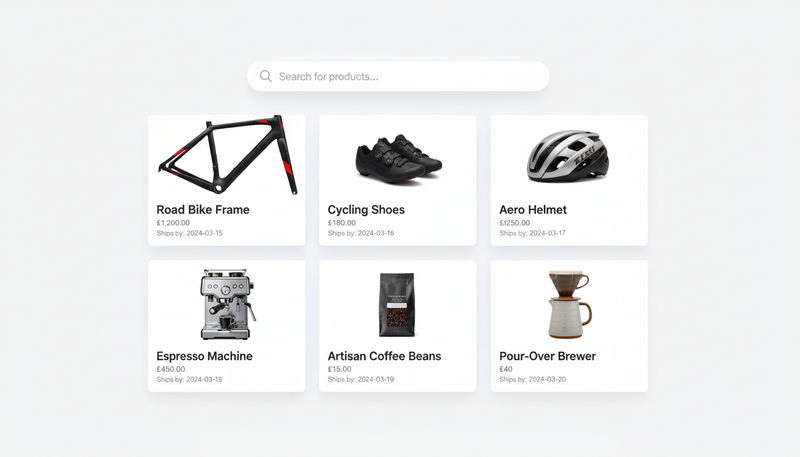
For two decades, online shoppers have been the ones doing the adapting. They learned to think in keywords, to scan facet panels, to phrase queries the way the search engine preferred. Every team behind the storefront — merchandising, paid media, site search, recommendations — optimized its own slice of that funnel without ever questioning the underlying contract: humans bend toward the machine, not the other way around.
That contract is breaking. Conversational interfaces, multimodal queries, and autonomous shopping agents are quietly turning the storefront into an API — one where the entity on the other end may not know what a facet is, much less how to compose one. AI-native product discovery is the response: a discovery layer where intent is the primary key, not keywords.
The lie we all accepted
For years the search bar has been treated as a solved problem. Optimize the index, tune the relevance, add typo tolerance, ship some autocomplete suggestions. If shoppers couldn't find what they were looking for, the assumption was that they didn't search well — not that the search experience was structurally incapable of understanding them.
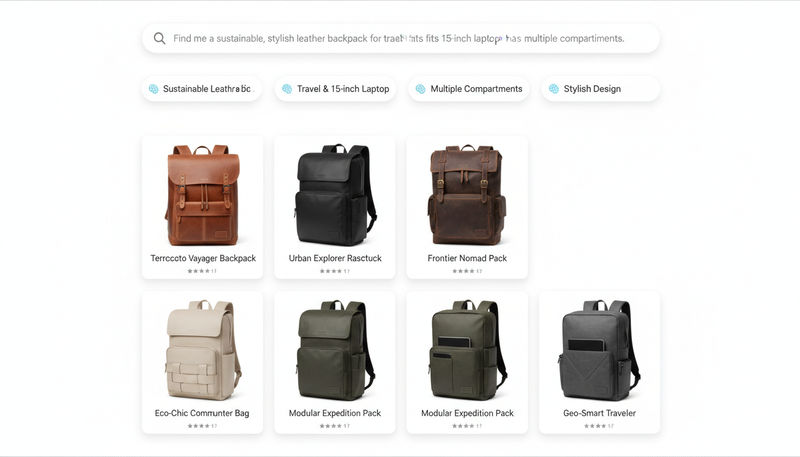
That assumption falls apart the moment a real shopper types a real query. "A casual wedding outfit for an outdoor ceremony in August." "Something that goes with this living room photo." "A gift for my dad who loves cycling and good coffee, under $80." Every one of these requests carries context, constraints, and intent that classical search collapses into a bag of words. The shopper is doing exactly what natural language allows; the engine is doing exactly what it was built to do. The mismatch isn't the user's fault.
The lie is that better search means faster facets and prettier UI. The truth is that better discovery means a different stack underneath.
Three moments, three failure modes
Three concrete moments expose where the current stack runs out of road.
The cross-category query. A shopper asks for a gift that spans cycling gear and specialty coffee. Classical search has no notion of bundling intent across categories. It returns either bike accessories or coffee beans, never the combination the shopper actually meant. Recommendations bolted on the side can sometimes recover, but only if a merchandiser thought to set up that exact cross-sell beforehand.
The visual reference. A shopper uploads a room photo and asks for furniture that complements it. Classical search has no vocabulary for color palettes, materials, or proportions. Visual search projects exist in many catalogs, but they live in their own silo with their own index, their own ranking model, and their own analytics. The two experiences fight each other.
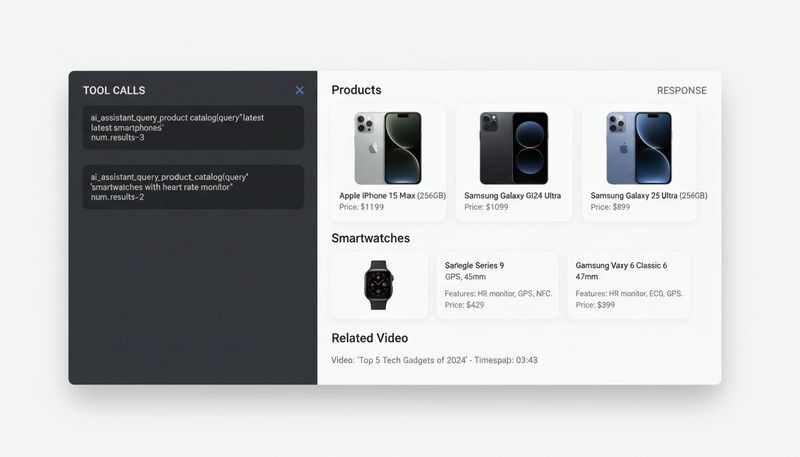
The agent on behalf. A customer's personal AI assistant queries your catalog with a structured intent — three constraints, a budget, a delivery window. The catalog returns ten thousand results paginated by relevance score. The agent does not paginate. It picks the top three and moves on, and your business never sees the other 9,997 SKUs the agent didn't bother to consider. Most retailers have no idea this is happening because the traffic does not look like a human browser.
Each failure has a workaround. None of the workarounds compose. That is the real cost of fragmented discovery.
Three eras of product discovery
The path to here has three eras, and each one solved part of the problem while creating the next bottleneck.
Era one: lexical. Solr, Elasticsearch, OpenSearch. Keywords as truth, TF-IDF as the scoring contract. Cheap, fast, well-understood. Falls apart on paraphrase, intent, and anything multimodal.
Era two: hybrid. Dense vector retrieval added alongside keyword retrieval, fused at query time. Better recall on long-tail queries, better tolerance for the way humans actually phrase things. But the user experience stayed the same — a search bar plus a chatbot, two parallel surfaces with two different feels and two different definitions of relevance. The plumbing got better; the contract didn't.
Era three: AI-native. Intent is the primary key. Retrieval is hybrid by default. Ranking is a learned ensemble of relevance, business rules, inventory, and personalization. Conversational, visual, structured, and agent-driven queries all resolve against the same semantic catalog. The search bar is no longer the only doorway; it is one of many.
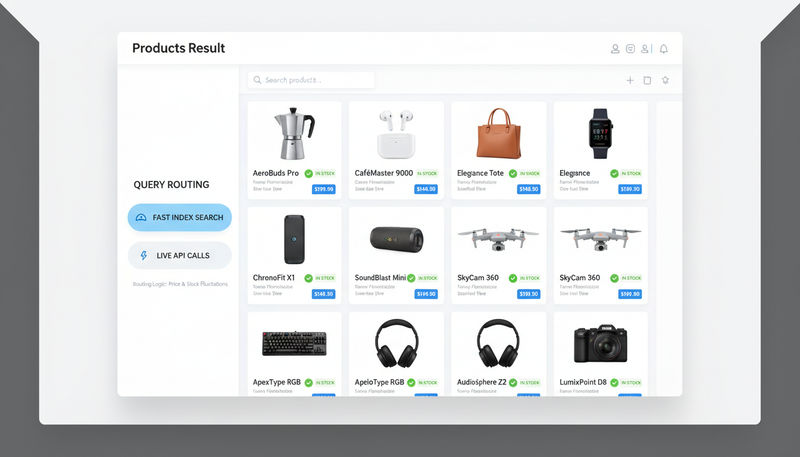
The era-three stack does not retrofit onto an era-two index. It needs different primitives — a semantic catalog refreshed in near-real-time, a retrieval engine that fuses signals, a reranker that knows when to call a generative model and when not to. Most importantly, it needs one observability plane across every surface, so the team can finally see what humans, chatbots, and agents are actually doing.
The demo that changed how I think about discovery
The clearest way to feel the difference is to watch a shopper interact with a discovery layer that was built unified from day one. Picture this exchange against a real catalog, no manual tagging, no curated cross-sells, no hand-tuned synonym lists:
Shopper: I need a thank-you gift for my brother. He just started cycling and he drinks really good coffee. Under eighty dollars, I want it to arrive before Friday.
System: Here are six options grouped two ways — cycling-related gifts (handlebar bag, ride socks, a frame-mounted espresso maker) and coffee-related gifts (single-origin set, hand grinder, gooseneck kettle). All in stock, ship-by Tuesday or sooner, all under $80.
Shopper: He doesn't have an espresso machine yet. Lean toward the coffee gear.
System: Updated. Top pick: a hand grinder paired with two single-origin bags. $74, ships tomorrow.
Nothing in that exchange is exotic on its own. What's hard is making it happen against the same catalog, the same inventory feed, the same merchandising rules, and the same pricing engine that the storefront uses for everything else. When discovery is unified, this is one conversation against one stack. When it isn't, it is three different teams shipping three different stacks and arguing about which one owns the result.
The integration problem is the hard part
It is tempting to read "AI-native discovery" and assume the magic is the LLM. It is not. The hard problem is plumbing.
Latency budgets get tight quickly. A generative call per request might be acceptable for an exploratory query, but it cannot be the default ranker — at scale it ruins cost economics and tail latency. The era-three stack uses generative reasoning sparingly, as a tiebreaker on hard queries and as an explainer for agent traffic, not as the every-request scorer.
Business rules and inventory constraints cannot live downstream of a black box. Merchandisers need to know that their seasonal boost is applied, their out-of-stock SKUs are demoted, their margin-aware ranking still holds. The reranker stage is where that contract lives, and it has to be transparent enough for a non-engineer to audit.
Observability is the part most retailers skip and most regret. Agents do not click; they accept or move on. If your analytics still pivot around session, click, and dwell, you are blind to the fastest-growing slice of your traffic. The unified stack logs every impression, every accept, every refinement against the same schema — including the structured calls from external agents. You can finally answer the question which queries are agents losing on?, and the answer is almost always actionable.
For engineering teams evaluating where to start, the highest-leverage move is to stand up a semantic catalog alongside the existing index — shadow-route traffic, compare results offline, and migrate one surface at a time. The capabilities are explored in detail in the seekora product overview and the AI search surface.
Wrapping up: what comes next
Autonomous shopping traffic is not a five-year projection. It is showing up in retailer logs today, growing faster than most analytics dashboards have noticed because it does not look like a human browser. The catalogs that unify discovery now will be the catalogs that agents prefer to query — the ones with low latency, structured answers, and grounded responses. The catalogs that wait will be treated as fallback options, scraped when nothing better is available.
None of this means the search bar goes away. It means the search bar becomes one of many surfaces, and increasingly not the most important one. The teams who recognize that early and invest in a unified discovery layer will get to define the shape of the next era of commerce instead of reacting to it.
We are early. That is the part worth being excited about. The contract between shopper and catalog is being rewritten in real time, and the companies that get it right will not just win on conversion — they will win on the only metric that matters in agent-driven commerce, which is whether your catalog is the one the agent picks first. AI-native product discovery is how that future gets built. The work starts with deciding that discovery deserves the same investment as the storefront itself.
AI-Native Product Discovery: The End of Search-As-We-Knew-It
Stay ahead of the curve.
Subscribe to get the latest e-commerce insights and AI strategies delivered directly to your inbox.